How to choose trail running shoes without getting it wrong
Terrain, lugs, drop, cushioning and fit: the criteria that really matter when picking trail running shoes, and the ones you can ignore.
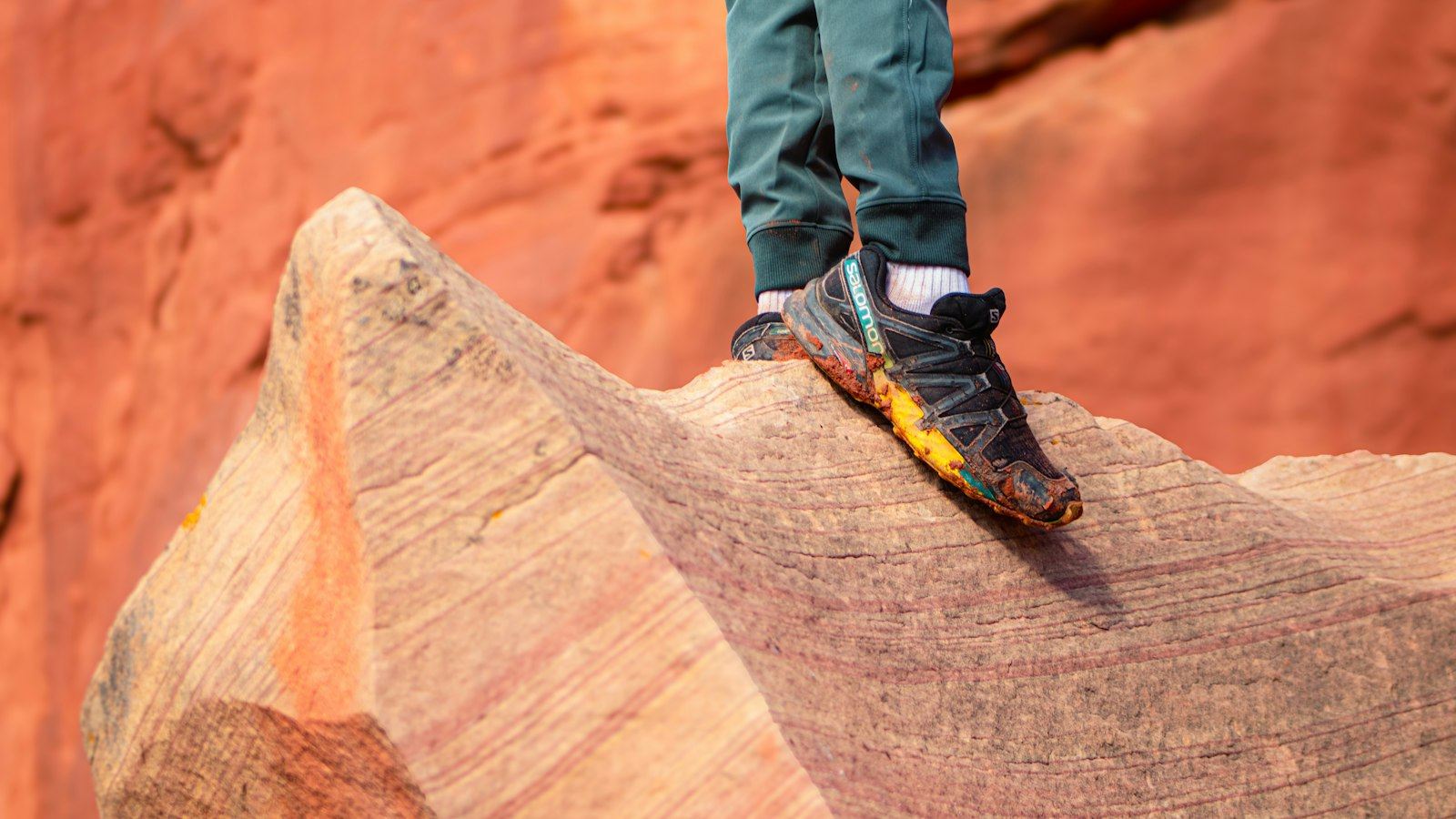
A good trail shoe is, first of all, a shoe that suits the ground you run on most. Everything else (brand, colour, carbon plate, the latest buzzword) comes after. Here are the five things to check, in order.
1. Terrain: the first question to ask
Before you look at a single model, ask yourself where you spend 80% of your running time.
- Smooth paths, dry forest, some tarmac: a versatile shoe with short lugs and good cushioning will do the job. Some are close to a road shoe.
- Mountains, scree, rock: you need grip on stone, a sole that shields you from sharp rocks, and a foot that stays put on side slopes.
- Mud, soft ground, wet grass: go for long, widely spaced lugs that bite into the ground and shed dirt.
If you mix all of these, pick a middle-ground shoe rather than a specialist. It won’t shine everywhere, but it will never struggle either.
2. Lugs: depth and spacing
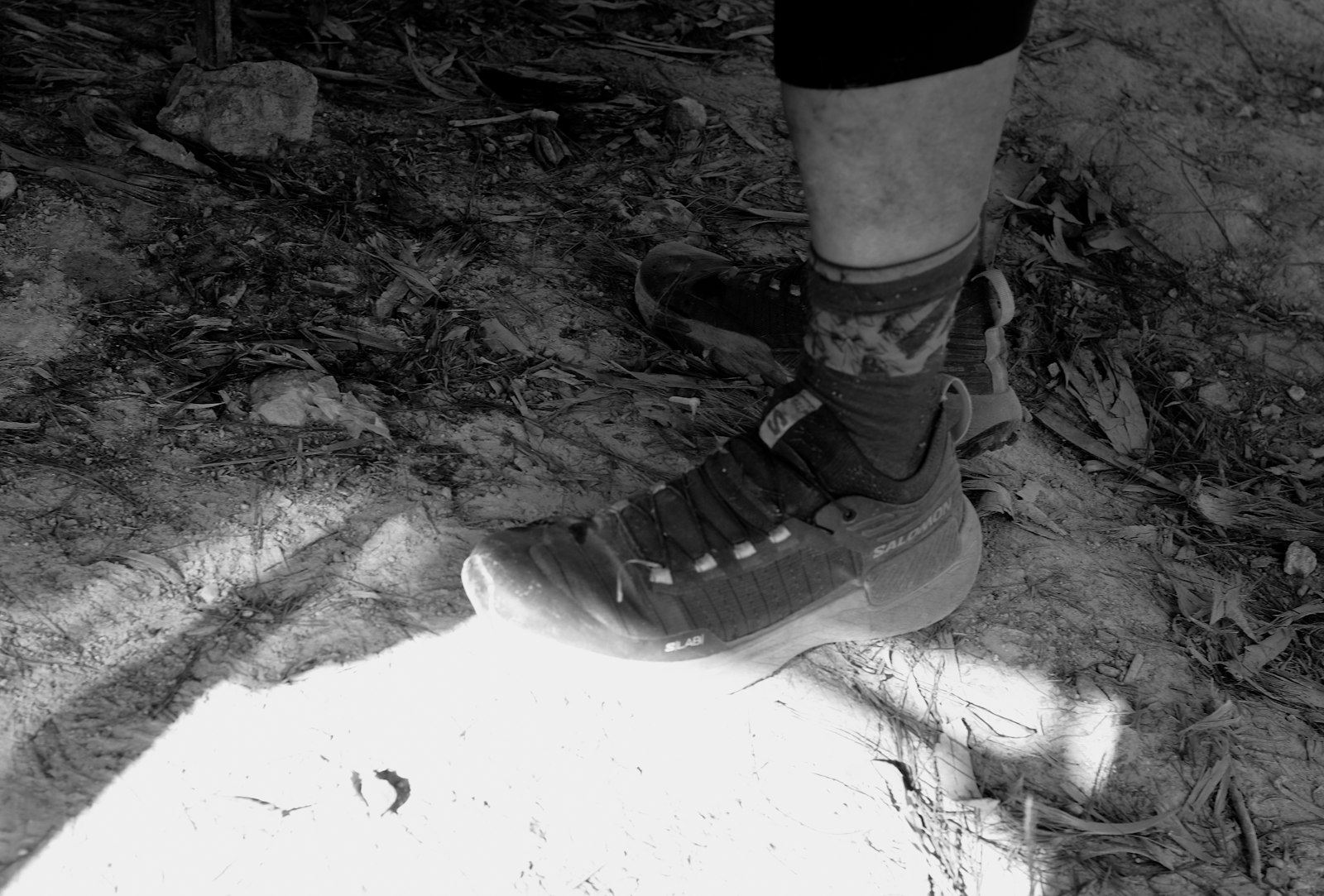
Lug depth is measured in millimetres.
| Depth | Best for | Example |
|---|---|---|
| 3 to 4 mm | Dry trails, smooth paths, road sections | Hoka Challenger 7 (4 mm) |
| 4 to 5 mm | Mixed terrain, all-round use | Altra Lone Peak 9 (4.5 mm) |
| 5 mm and more | Mud, snow, soft and loose ground | Saucony Peregrine 15 (5 mm), Salomon Speedcross 6 (about 6 mm measured) |
These are the brands’ own figures, except for the Speedcross 6, which OutdoorGearLab measured. Independent testers often find lugs slightly shallower than the spec sheet, by around half a millimetre.
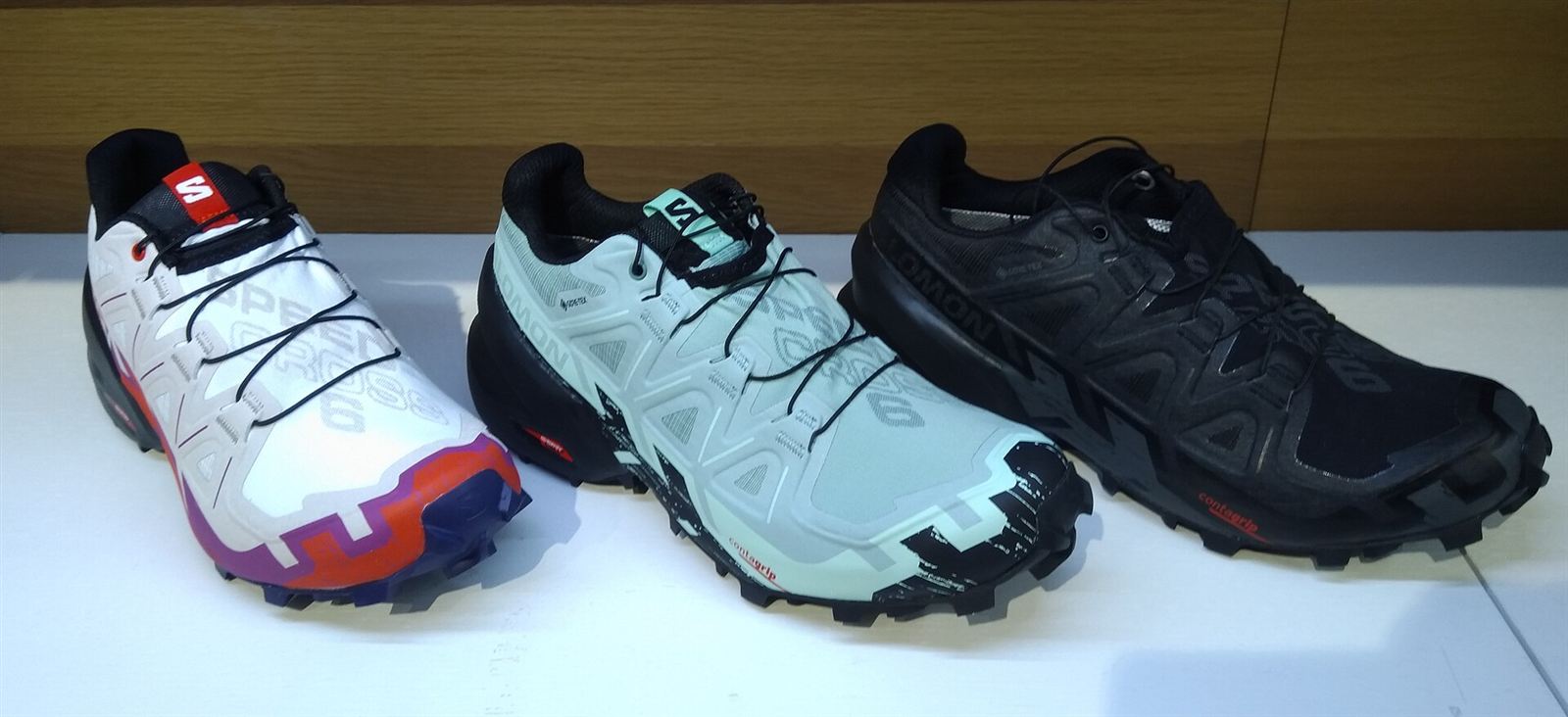
Long lugs on hard ground feel unstable and wear out fast. Short lugs in mud mean you will slide. The rubber compound matters too: some soles grip wet rock very well, others much less. Field tests tell you more about this than spec sheets.
3. Drop: don’t change it overnight
Drop is the height difference between the heel and the forefoot. It usually ranges from 0 to 12 mm.
- A high drop (8 mm or more) takes load off the calves and Achilles tendon. Most classic road shoes sit here. Examples: the Brooks Cascadia 18 (8 mm) or the Salomon Speedcross 6 (10 mm claimed).
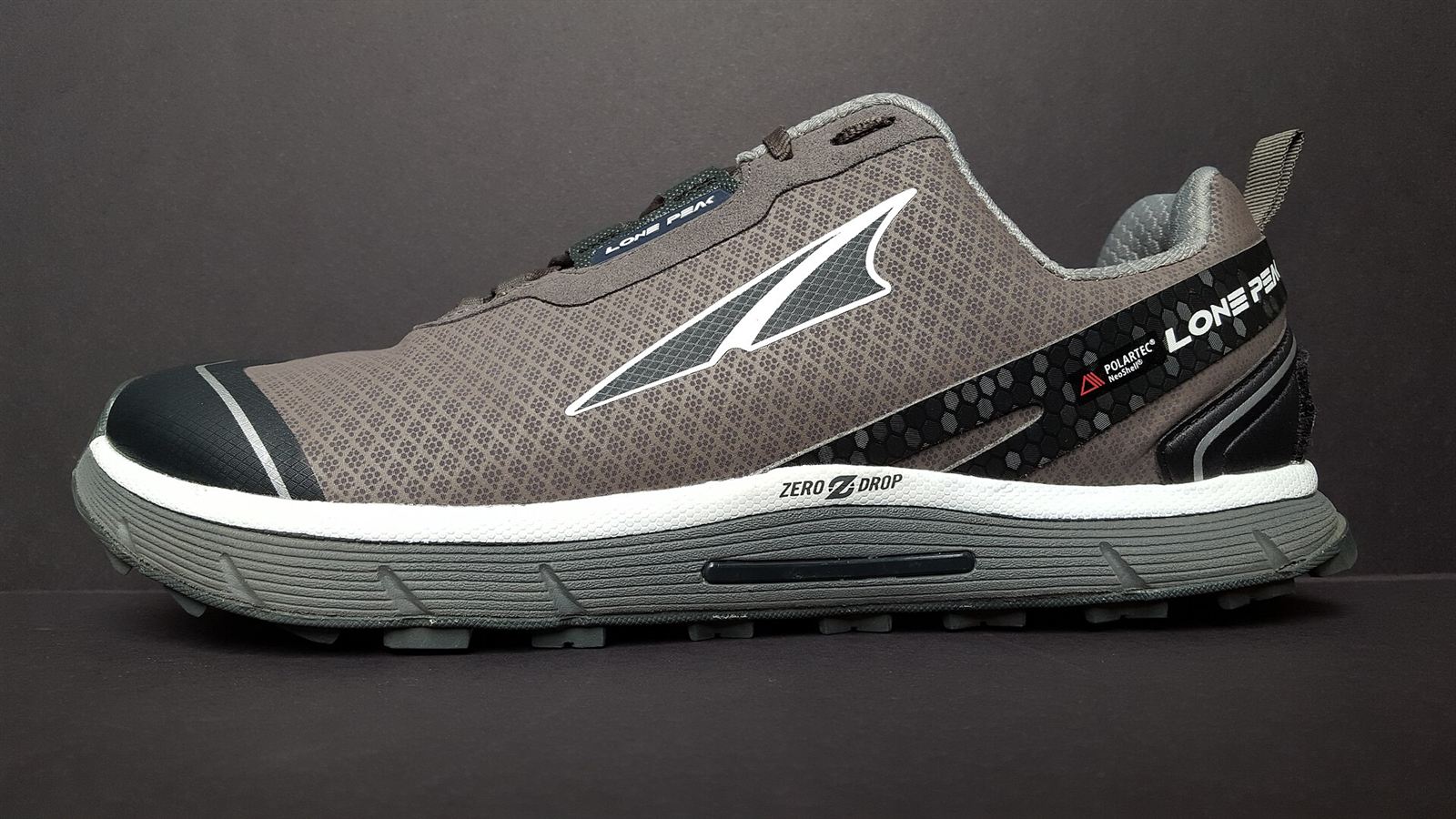
- A low drop (0 to 6 mm) encourages a flatter footstrike but works the calves harder. Examples: the La Sportiva Bushido III (6 mm), the Hoka Speedgoat 6 (5 mm), the Saucony Peregrine 15 (4 mm) and the Altra Lone Peak 9 (0 mm).
Take spec sheets with a pinch of salt: measured drop sometimes differs a lot from the claimed figure. RunRepeat measured 8.8 mm on the Hoka Challenger 7, sold as 5 mm, and 14.1 mm on the Speedcross 6, sold as 10 mm. If you’re torn between two models, lab tests give a truer picture than the box.
No drop is better in absolute terms. The real rule: if the new shoe’s drop is very different from your current pair, make the switch gradually over several weeks, starting with short runs.
4. Cushioning and protection
The longer you run, the more you’ll appreciate cushioning. Over 15 km, a firm shoe close to the ground feels great. Over an ultra, your legs will thank you for a thicker sole. To give you an idea, the Hoka Speedgoat 6 claims 40 mm of sole under the heel in men’s sizes, against 25 mm for the Altra Lone Peak 9.
The downside of a high stack is stability: you sit further from the ground, and on technical terrain your ankles are more exposed. Again, it depends on where you run.
For protection, look at two things:
- the toe cap, which saves your toes when you kick a rock;
- a rock plate in the sole, which dulls the feel of sharp stones. The Brooks Cascadia 18 has a flexible one; the La Sportiva Bushido III has a 1.5 mm forefoot rock guard.
5. Size and fit: the most overlooked criterion
This is where most blisters and black toenails come from.
- Go half a size to a full size up from your everyday shoes. On descents your foot slides forward, and on long runs it swells.
- Leave about a thumb’s width between your longest toe and the front of the shoe.
- Try shoes on late in the day, wearing your running socks.
- Check the toe box width. Some brands run narrow, others let your toes spread. A cramped foot over 30 km is a long day.
Your heel should be held firmly. If it lifts with every step, expect rubbing.
What about waterproof membranes?
Shoes with a membrane (Gore-Tex type) keep your feet dry in dew, snow and shallow puddles. But once water gets in over the top, they dry very slowly, and they run hot in summer. For most trail runners, a shoe without a membrane, which gets wet but dries fast, is more practical. A membrane makes sense for winter and cold-weather outings. Many models come in both versions, like the Hoka Speedgoat 6 and its GTX sibling.
A late-autumn night race such as the SaintéLyon at the end of November is one of the situations where the question is worth asking.
How long does a trail shoe last?
Usually between 600 and 1,000 km, depending on the model, your weight and the terrain. The tell-tale signs: lugs worn flat, a midsole sagging on one side, cushioning that feels clearly dead. Logging mileage in your running app helps you see it coming.
In short
- Start from the terrain you run on most.
- Match lug depth to it.
- Stay close to your current drop, or change gradually.
- The longer the distance, the more cushioning matters.
- Never skimp on fit: try shoes on, and leave some room.
The best shoe on the market is worthless if it doesn’t fit you. Go to a shop, try several models and, if you can, walk down the incline ramp many specialist running stores have.
Sources
- RunRepeat: Salomon Speedcross 6 lab test (measured drop and lugs)
- OutdoorGearLab: Salomon Speedcross 6 women's review
- REI: Hoka Speedgoat 6 specs (stack, drop, lugs)
- REI: Brooks Cascadia 18 specs
- RunRepeat: Hoka Challenger 7 lab test (measured drop)
- Fleet Feet: Altra Lone Peak 9 specs
- REI: La Sportiva Bushido III specs
- Running Warehouse: Saucony Peregrine 15 specs
- RunRepeat: Hoka Speedgoat 6 GTX review